Hello, fellow travelers and adventure enthusiasts! If you’re visiting Tokyo, you’ve likely already marveled at the neon-lit streets of Shibuya, the historic charm of Asakusa, and the bustling energy of Shinjuku. While Tokyo itself is a treasure trove of experiences, sometimes the best way to appreciate Japan’s diversity is to escape the urban crowds and explore the stunning destinations just a short journey away. From ancient temples to serene nature escapes, these day trips from Tokyo offer a refreshing contrast to the city’s fast pace. In this guide, I’ll take you through some of the most rewarding day trips, complete with detailed itineraries, practical tips, and insights to help you make the most of your time. Let’s venture beyond Tokyo’s hustle and bustle!
Why Take a Day Trip from Tokyo?
Tokyo is an incredible hub of culture, technology, and history, but its intensity can be overwhelming. Day trips allow you to experience Japan’s quieter, more traditional side, or immerse yourself in breathtaking natural landscapes, all while returning to the comfort of your Tokyo base by evening. Thanks to Japan’s efficient rail system, including the Shinkansen (bullet train) and local lines, many destinations are within 1-2 hours of central Tokyo. Whether you’re seeking spiritual enrichment, scenic beauty, or small-town charm, these excursions will enrich your trip with unforgettable memories. Let’s explore five incredible day trips worth taking!
1. Nikko: A UNESCO World Heritage Gem (2 Hours from Tokyo)
Nestled in the mountains of Tochigi Prefecture, Nikko is a historic town renowned for its stunning shrines, temples, and natural beauty. It’s an ideal day trip for history buffs and nature lovers alike, offering a glimpse into Japan’s Edo-period architecture and serene landscapes.
Highlights
- Toshogu Shrine: This UNESCO World Heritage Site is the final resting place of Tokugawa Ieyasu, the founder of the Tokugawa Shogunate. Famous for its intricate carvings (like the “see no evil, hear no evil, speak no evil” monkeys), vibrant colors, and the iconic Yomeimon Gate, it’s a masterpiece of Japanese craftsmanship.
- Kegon Falls: One of Japan’s most beautiful waterfalls, plunging 97 meters into a dramatic gorge. Take the elevator down for a closer view from the observation deck.
- Lake Chuzenji: A peaceful lake at the base of Mount Nantai, perfect for a short walk or boat ride if time allows. The surrounding scenery is especially stunning during autumn foliage season (October-November).
Suggested Itinerary
- Morning: Depart from Tokyo Station or Shinjuku Station via the JR Tohoku Shinkansen to Utsunomiya, then transfer to the JR Nikko Line (total travel time: about 2 hours, ¥2,800-¥5,000 with JR Pass or regular fare). Arrive in Nikko by 9:00 AM. Start at Toshogu Shrine (entry ¥1,300, 1.5-2 hours) to explore the complex and nearby Futarasan Shrine.
- Afternoon: Take a local bus (20 minutes, ¥500) to Lake Chuzenji and Kegon Falls. Spend 1-1.5 hours admiring the falls (elevator ticket ¥570) and strolling by the lake. Grab lunch at a nearby restaurant—try yuba (tofu skin), a Nikko specialty.
- Evening: Return to Nikko Station by bus and catch a train back to Tokyo, arriving by 6:00-7:00 PM.
Visiting Tips
- Travel with a JR Pass if you have one—it covers the Shinkansen and JR Nikko Line. Otherwise, book tickets via JR East’s website or at stations.
- Wear comfortable shoes; there’s moderate walking and some stairs at the shrines.
- Visit in autumn for vibrant foliage or winter for snow-dusted temples (dress warmly).
- Allow 6-8 hours total, including travel.
2. Kamakura: The Ancient Capital Near the Sea (1 Hour from Tokyo)
Just south of Tokyo in Kanagawa Prefecture, Kamakura is a historic coastal town often called the “Kyoto of Eastern Japan.” Once a political center in the 12th-14th centuries, it’s now a peaceful escape with ancient temples, a giant Buddha statue, and seaside charm.
Highlights
- Great Buddha (Daibutsu) at Kotoku-in Temple: This 13.35-meter-tall bronze statue, cast in 1252, is an iconic symbol of Kamakura. You can even step inside the statue for a small fee.
- Hase-dera Temple: Known for its beautiful gardens, a massive wooden Kannon statue, and ocean views. It’s especially lovely during hydrangea season (June).
- Tsurugaoka Hachimangu Shrine: Kamakura’s most important Shinto shrine, with a grand approach via Dankazura, a cherry tree-lined path.
Suggested Itinerary
- Morning: Take the JR Yokosuka Line from Tokyo Station or Shinjuku to Kamakura Station (1 hour, ¥940, covered by JR Pass). Arrive by 9:00 AM. Walk or take a local bus to Kotoku-in Temple (15 minutes, entry ¥300) to see the Great Buddha (1 hour).
- Afternoon: Head to Hase-dera Temple (10-minute walk or short bus ride, entry ¥400) for 1-1.5 hours of exploration. Grab lunch at a nearby café—try shirasu (whitebait) over rice, a local delicacy. Then, visit Tsurugaoka Hachimangu Shrine (15-minute bus or 30-minute walk back toward the station, free entry, 1 hour).
- Evening: If time permits, stroll to Yuigahama Beach (15-minute walk from Hase-dera) for a quick seaside view. Return to Tokyo via JR Yokosuka Line, arriving by 5:00-6:00 PM.
Visiting Tips
- Use the Enoden Line (a charming local train) between Kamakura and Hase stations if you prefer not to walk (¥200-¥300 per ride).
- Visit on a weekday to avoid weekend crowds, especially at the Great Buddha.
- Bring sunscreen or an umbrella—coastal weather can be unpredictable.
- Allow 5-7 hours total, including travel.
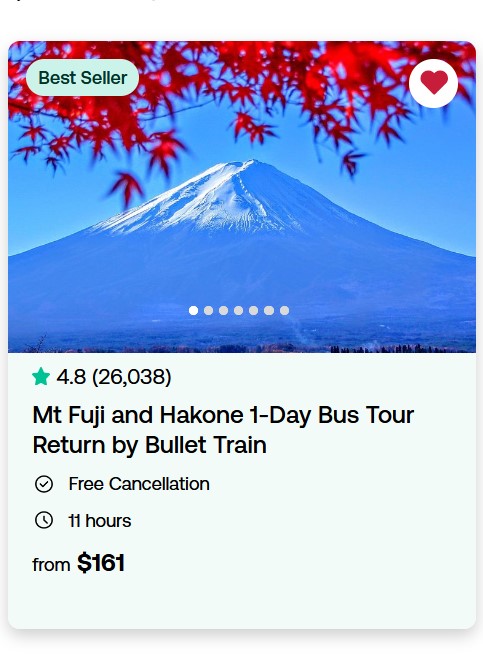
3. Hakone: Hot Springs and Mount Fuji Views (1.5-2 Hours from Tokyo)
Located in Kanagawa Prefecture, Hakone is a mountainous hot spring (onsen) region famous for its stunning views of Mount Fuji, scenic lakes, and relaxing baths. It’s perfect for a rejuvenating day trip, especially if you’re craving nature and tranquility.
Highlights
- Hakone Open-Air Museum: A unique outdoor art museum with sculptures (including works by Picasso) set against mountain scenery. It also has a foot onsen for a quick soak.
- Lake Ashi: A picturesque crater lake with boat cruises offering views of Mount Fuji on clear days. The iconic red torii gate of Hakone Shrine partially submerged in the water is a photo favorite.
- Owakudani Valley: A volcanic area with steaming vents and black boiled eggs (kuro-tamago) said to extend your life by seven years per egg eaten.
Suggested Itinerary
- Morning: Take the Shinkansen from Tokyo Station to Odawara (35 minutes, ¥3,200, covered by JR Pass), then transfer to the Hakone Tozan Railway to Hakone-Yumoto (15 minutes, ¥320). Arrive by 9:00 AM. Purchase a Hakone Free Pass (¥4,000 from Odawara, covers local transport and some attractions). Start at Hakone Open-Air Museum (entry ¥1,600, 1.5 hours).
- Afternoon: Take the Hakone Tozan Train and Cable Car to Owakudani (1 hour total, included in Free Pass) to see the volcanic landscape (1 hour). Then, ride the Hakone Ropeway to Togendai and board a pirate ship cruise on Lake Ashi (30 minutes, included in Free Pass). Disembark at Moto-Hakone for a quick photo at Hakone Shrine’s torii gate. Grab lunch—try kaiseki (multi-course meal) or soba noodles.
- Evening: Return via boat, ropeway, and train to Odawara, then Shinkansen to Tokyo, arriving by 6:00-7:00 PM.
Visiting Tips
- Check weather forecasts—Mount Fuji is often hidden by clouds. Spring and autumn offer the best visibility.
- The Hakone Free Pass saves money and hassle; buy it at Odawara Station.
- Bring a towel if you plan a quick onsen dip (some public baths are available).
- Allow 7-9 hours total, including travel.
4. Kawagoe: Edo-Period Charm (1 Hour from Tokyo)
Known as “Little Edo,” Kawagoe in Saitama Prefecture is a delightful town that retains the atmosphere of 17th-19th century Japan with its preserved merchant streets, traditional warehouses, and historic temples. It’s a quieter, closer alternative to Kyoto.
Highlights
- Kurazukuri Street: A historic district lined with clay-walled warehouses (kura) from the Edo Period, now housing shops, cafés, and museums. The architecture is striking and rare in modern Japan.
- Kawagoe Castle Honmaru Goten: The only remaining structure of the original castle, offering insight into feudal history (entry ¥100).
- Candy Alley (Kashiya Yokocho): A nostalgic lane with traditional sweet shops selling handmade candies, perfect for souvenirs.
Suggested Itinerary
- Morning: Take the Tobu Tojo Line from Ikebukuro Station to Kawagoe Station (1 hour, ¥480, not covered by JR Pass). Arrive by 9:00 AM. Start at Kurazukuri Street (10-minute walk or short bus ride, free to explore) for 1.5-2 hours of wandering and shopping.
- Afternoon: Visit Kawagoe Castle Honmaru Goten (5-minute walk, 30 minutes). Then, stroll to Candy Alley (10-minute walk) for sweets and snacks (1 hour). Grab lunch at a local spot—try unagi (grilled eel) or sweet potato dishes, a Kawagoe specialty.
- Evening: Return to Kawagoe Station and take the train back to Tokyo, arriving by 4:00-5:00 PM.
Visiting Tips
- Wear comfortable shoes—streets are often cobbled or uneven.
- Visit during the Kawagoe Festival (third weekend of October) for traditional floats if your timing aligns, though expect crowds.
- Budget-friendly trip; most attractions are free or low-cost.
- Allow 5-6 hours total, including travel.
5. Enoshima: A Scenic Island Escape (1.5 Hours from Tokyo)
Just off the coast near Kamakura in Kanagawa Prefecture, Enoshima is a small island connected to the mainland by a bridge, offering panoramic ocean views, shrines, and a laid-back vibe. It’s a fantastic spot for a coastal day trip with a mix of culture and nature.
Highlights
- Enoshima Shrine: A complex of three shrines dedicated to Benzaiten, the goddess of music and wealth. The vibrant red torii gates and sea views are highlights.
- Samuel Cocking Garden: A botanical garden with a lighthouse (Sea Candle) offering 360-degree views of the Pacific Ocean and, on clear days, Mount Fuji (entry ¥500).
- Iwaya Caves: Ancient sea caves on the island’s western side, steeped in legend and offering a cool, mysterious atmosphere (entry ¥500).
Suggested Itinerary
- Morning: Take the JR Tokaido Line from Tokyo Station to Fujisawa (1 hour, ¥1,320, covered by JR Pass), then transfer to the Enoden Line to Enoshima Station (15 minutes, ¥220). Arrive by 9:30 AM. Cross the bridge to the island (10-minute walk) and start at Enoshima Shrine (1.5 hours, free entry).
- Afternoon: Head to Samuel Cocking Garden (10-minute walk uphill or use escalators for ¥360) for views and relaxation (1 hour). Grab lunch at a seaside restaurant—try fresh seafood like sashima (raw fish). Then, visit Iwaya Caves (15-minute walk, 1 hour).
- Evening: Return to Fujisawa via Enoden Line and catch a train to Tokyo, arriving by 5:00-6:00 PM.
Visiting Tips
- Use escalators or walk up the island’s slopes—bring water for hydration.
- Check tide times for cave visits; they may close during rough seas.
- Visit in summer for beach vibes or autumn for clearer Fuji views.
- Allow 6-8 hours total, including travel.
Practical Tips for Day Trips from Tokyo
- Transportation: Japan’s rail network is efficient and punctual. Use Hyperdia or Google Maps to plan routes. A JR Pass (starting at ¥50,000 for 7 days) is cost-effective if taking multiple Shinkansen trips (covers Nikko, Kamakura, Hakone, Enoshima). Otherwise, buy individual tickets at stations or via apps like Suica/Pasmo for local lines.
- Timing: Start early (7:00-8:00 AM departures) to maximize daylight and avoid rush hour crowds on return trips (5:00-7:00 PM). Check return train schedules in advance—some rural lines have less frequent services.
- Packing: Bring a small backpack with essentials—water, snacks, sunscreen, umbrella (for rain or sun), and a portable charger. Wear comfortable shoes for walking.
- Budgeting: Day trips range from ¥1,000-¥5,000 for transport (less with JR Pass) and ¥500-¥2,000 for attractions. Budget extra for meals (¥1,000-¥2,000 per person) and souvenirs.
- Language: English signage is limited outside Tokyo; download translation apps like Google Translate or carry a phrasebook. Station staff often help with basic English.
- Weather: Check forecasts—mountain areas like Nikko and Hakone can be cooler than Tokyo. Pack layers or rain gear as needed.
Why These Day Trips from Tokyo Are Unmissable
Venturing beyond Tokyo’s urban sprawl reveals Japan’s rich tapestry of history, spirituality, and natural beauty. Whether you’re standing before Nikko’s ornate shrines, gazing at Mount Fuji from Hakone’s lakes, or wandering Kawagoe’s Edo-era streets, each destination offers a unique perspective on Japanese culture. These day trips balance accessibility with authenticity, allowing you to experience the country’s quieter side without straying far from your Tokyo base.
Final Thoughts: Escape the Crowds and Explore from Tokyo
Tokyo is a gateway to some of Japan’s most captivating destinations, and these day trips prove you don’t need to travel far to uncover extraordinary experiences. From the sacred serenity of Kamakura to the coastal allure of Enoshima, each journey offers a chance to breathe, reflect, and connect with Japan beyond the neon lights. So, pack your day bag, grab your train ticket, and set out on an adventure that complements your Tokyo stay. The hidden corners of Japan are waiting to be discovered!
Have you taken a day trip from Tokyo, or are you curious about a specific destination? Drop a comment below—I’d love to share more tips or hear about your experiences. Safe travels! 🚅🌸🇯🇵


 English
 Japanese
 Korean
 Chinese
 German
 Spanish
 French
 Thai
Thai Russian