

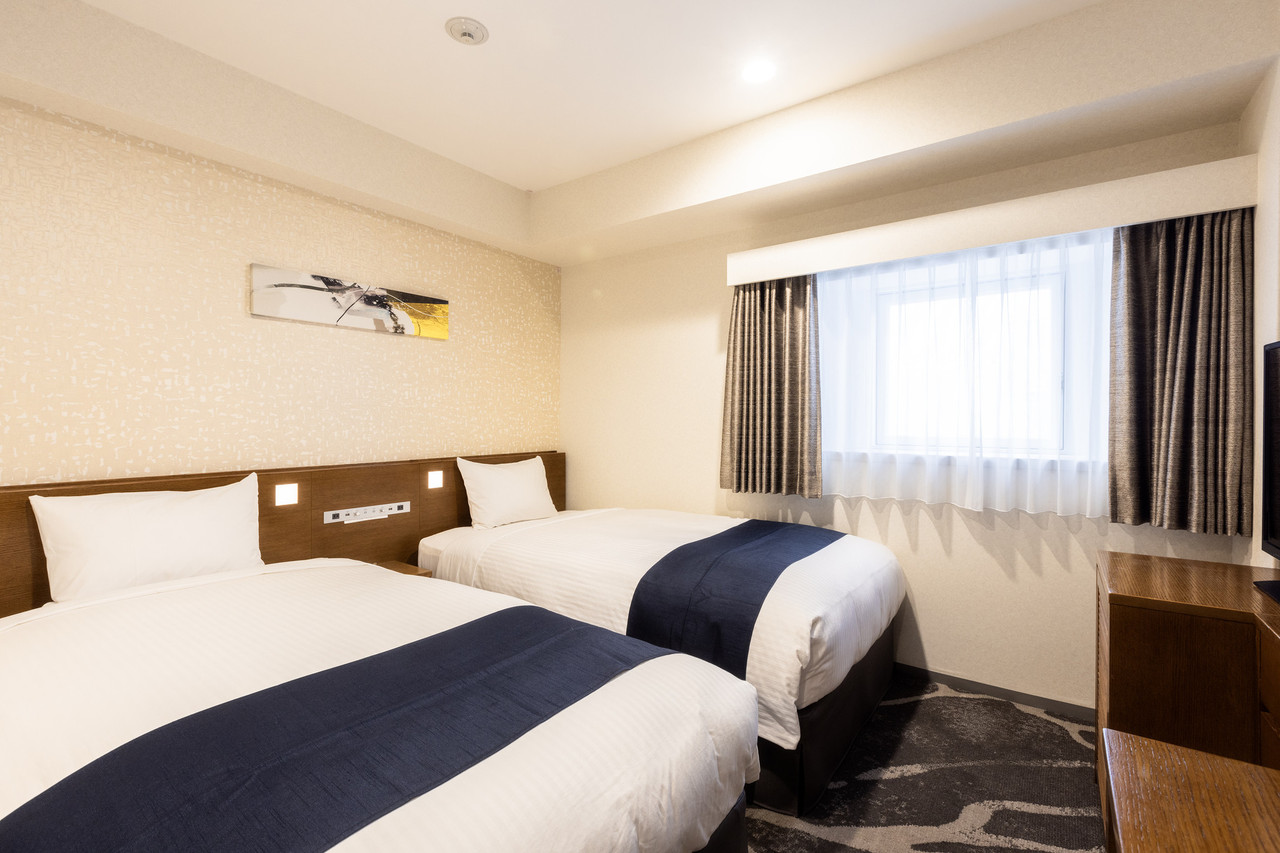
With 1,281 rooms stacked across 25 floors, the Shinjuku Washington Hotel is less a boutique property and more a small vertical city — and its rate table reflects that, with roughly 39 distinct room categories on Trip.com at any time (the listing shows 4 up front, then “35 remaining room types”). This guide unpacks the categories that actually matter, the dimensions you should expect, and the three upgrades that are worth yen versus the three that are not. 🛌
🧭 How the Room Line-Up Is Organised
Washington-room naming follows a simple grammar: bed configuration (Single, Semi-Double, Double, Twin) × catégorie (Standard, Superior, Renewal, High Floor) × view or smoking flag. The property was opened in 1983 and renovated in 2016, so you will see “Renewal” badges on refreshed floors and fixed windows on the tower’s high levels. Non-smoking is the default; smoking rooms and designated public areas handle the rest.
| Family | Typical Size | Typical Bed Setup | Best For |
|---|---|---|---|
| 🛏 Single / Semi-Double | 13–15 m² | 1 single / small double bed | Solo travelers, one-night business stays |
| 🛌 Superior Double | 16–19 m² | 1 queen bed | Couples, lighter packers |
| 🛌🛌 Superior Twin | 19 m² | 2 single beds | Friends, families splitting beds, coworkers |
| ⭐ High Floor Renewal Twin | 19 m² | 2 single beds, floor 24 example | View seekers, light sleepers wanting quiet |
| 🎲 Run of House | Assigned at check-in | Hotel’s choice | Flexible travelers chasing the lowest price |
🛌 The Room We Verified: High Floor Renewal Superior Twin
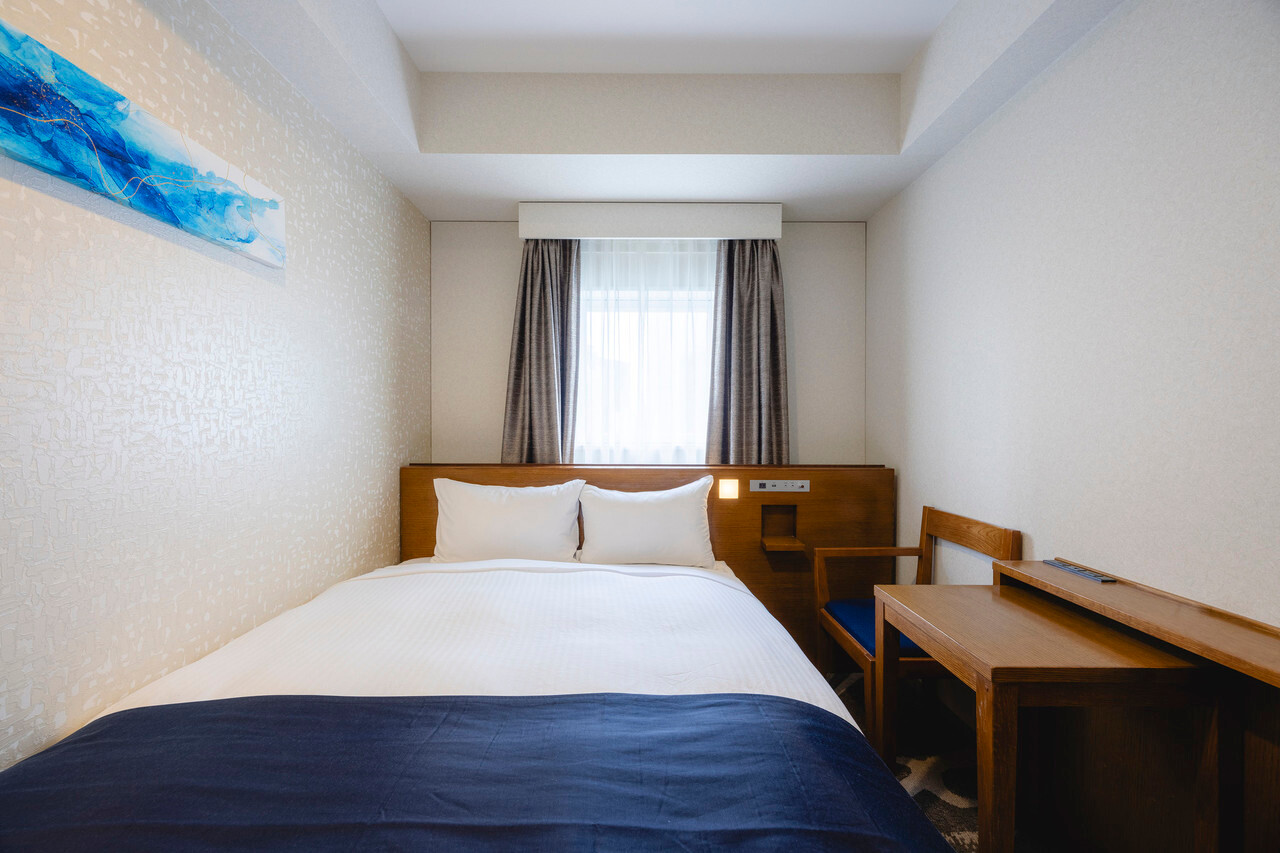
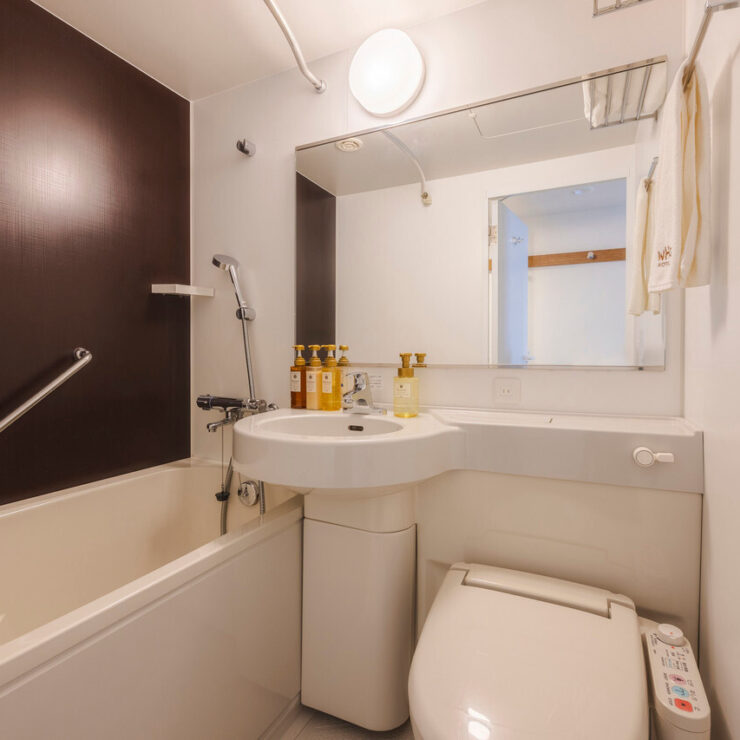
The listing’s representative room is the High Floor, Renewal Superior Twin: 19 m² on floor 24 with two single beds, a fixed window, blackout curtains, heating, a bidet sprayer and non-smoking status. In practice this means: a comfortable 96–100 cm-wide bed each, a slim desk, an LED TV, a refrigerator, an electric kettle, free Wi-Fi and the classic Japanese unit bathroom with shower-over-tub and complimentary toiletries. 🚿
Is 19 m² small? By Western chains, yes. By Shinjuku standards, it is respectable — Trip.com’s AI review summary (based on thousands of recent reviews) describes rooms as “compact but equipped with essentials,” and repeat guests treat the size as a known quantity: “Although room small but understood that’s Japan,” as one Malaysian reviewer put it. ✨
💡 Packing math: Two 19 m² twins for four people often cost less than one “family room” elsewhere in Shinjuku — and you keep two bathrooms. Price both configurations before assuming you need a larger category.
🎲 Run of House: The Price Hunter’s Play
Run of House (ROH) means the hotel assigns whatever room is free at check-in, in exchange for the lowest published rate of the day. The listing shows ROH with core amenities — free Wi-Fi, air conditioning, private bathroom, refrigerator, daily housekeeping. The gamble is location within the building (low floor, possibly near elevators) rather than cleanliness or equipment, which do not change by category.
Who should book it? Solo travelers and couples on short trips who spend daylight hours outside. Who should not? High-floor view chasers, light sleepers sensitive to elevator noise, and anyone who wants to guarantee a twin when traveling with a friend.
🪟 Views, Floors and the Fixed-Window Question
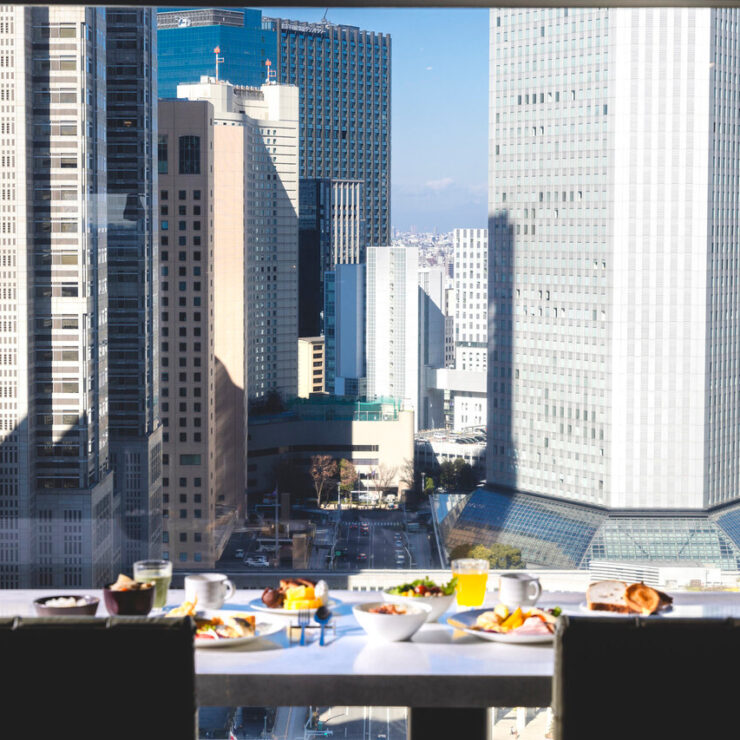
Two structural facts shape every room decision here. First, high-floor rooms have fixed windows — you will get the panorama (the Tokyo Metropolitan Government Building and the Nishi-Shinjuku canyon of towers) but not openable glass. If fresh air matters to you, book a mid or low-floor category. Second, the hotel faces the quieter west side: rooms overlook TMG, Shinjuku Chuo Park and the mountains on clear days rather than Kabukicho’s neon canyon. Nighttime is genuinely dark here — a plus for sleeping, a minus for skyline hobbyists, who should instead walk 400 m to the free TMG observation decks. 🌃
🚿 Bathrooms, Amenities and the Small Print
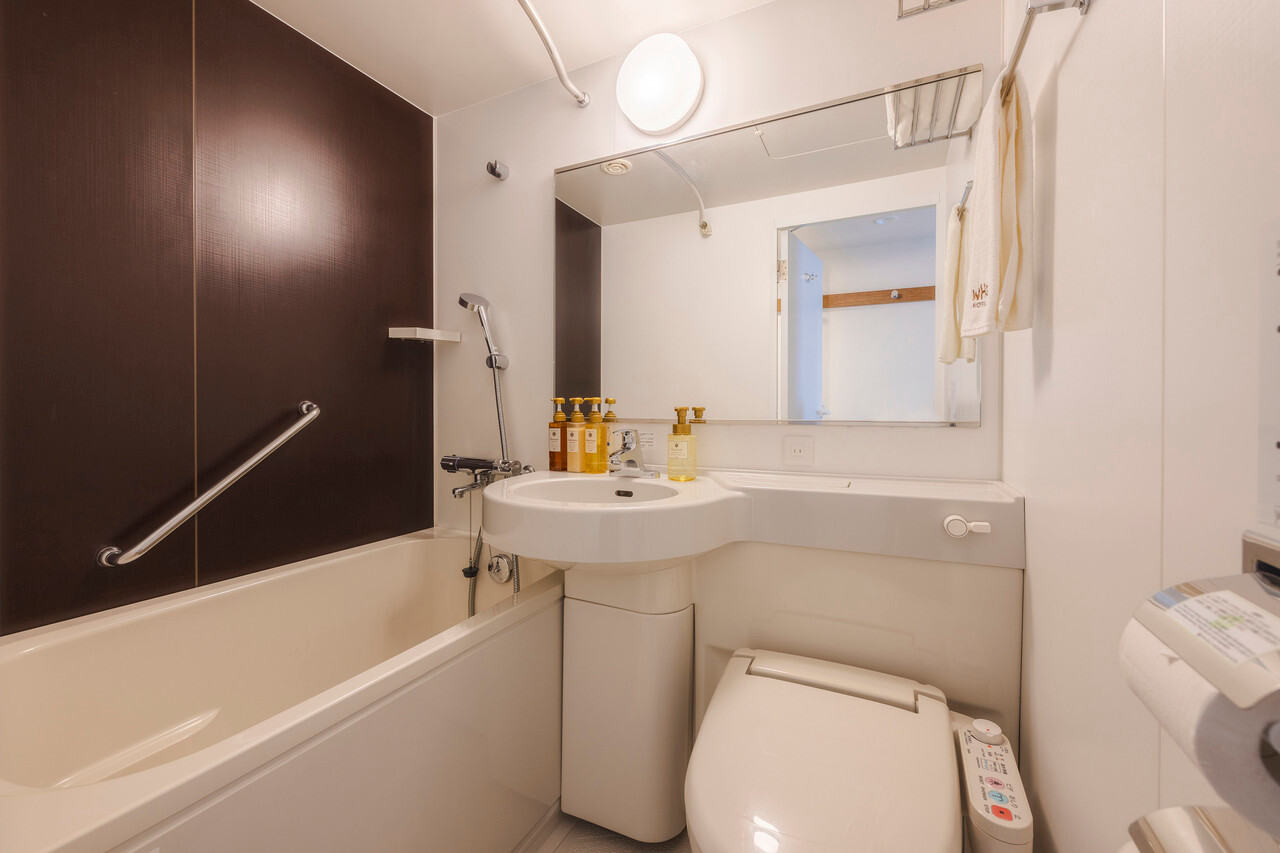
Every category shares the same core amenity list: free Wi-Fi, LED TV with digital programming, refrigerator, electric kettle, desk, phone, air conditioning, private bathroom with shower/tub combination, bidet sprayer and complimentary toiletries. Housekeeping is daily. The bathroom is the classic compact Japanese unit-bath — spotless (the hotel’s Cleanliness score is 8.8/10, its highest), but with the older-style drainage some reviewers flag; let the shower run a minute before use and you will be fine. 🧼
- 🛗 Elevators reach all 25 floors; expect a short wait at the 14:00 check-in rush.
- 🚭 Non-smoking is default; confirm the flag on your specific category before booking.
- 👤 Main guest must be 18+; children of all ages are welcome in existing bedding.
- 🧳 Free luggage storage covers the pre-14:00 gap — no need to book a room just to store bags.
- 🧺 Laundry room on-site handles the mid-trip wash; dry cleaning is also offered.
💴 Which Room Type Is Actually Worth Paying For?
| Upgrade | Worth It? | Why |
|---|---|---|
| High Floor Renewal | ✅ Usually | Refreshed interiors + quietest floors + best views; modest surcharge |
| Twin instead of Double | ✅ For 2 friends | Two real beds beat one shared queen at similar pricing |
| Run of House | ✅ For short stays | Lowest rate; risk is only floor/position |
| “Wide” or corner categories | ⚠️ Situational | Nice, but Shinjuku hours are spent outside the room |
| Smoking room | ⚠️ Only if needed | Smoking areas exist outside; inventory is limited |
Base rates start around US$79 on Trip.com, with the search average near US$183 for typical dates; weekends and New Year spikes climb higher (the calendar shows days topping US$300). Book early for December and sakura season, or grab a free-cancellation rate if your dates are soft. 💴
👨👩👧 Rooms for Three or More People
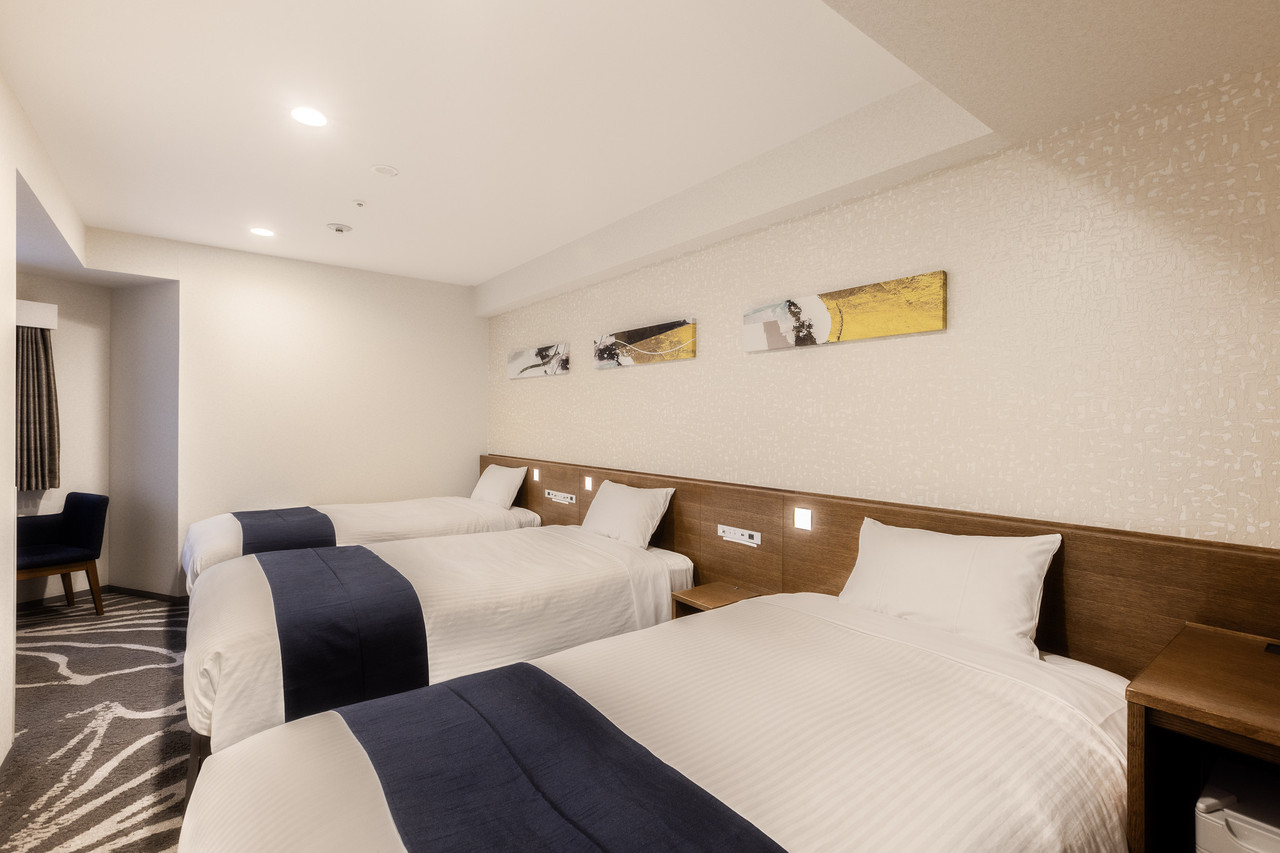
Japanese hotel rooms are engineered around one or two guests, and this property is no exception — a Singapore family of three reviewed their stay as “a bit small for 3 people. But it is still manageable.” You have three workable strategies:
- 1️⃣ Two twins: book two Superior Twins for a family of four — best comfort-per-yen, two bathrooms, and often cheaper than a single large room in Shinjuku. 👯
- 2️⃣ Existing bedding + extra bed: children of all ages are welcome, and extra beds/cribs can be requested subject to room type (policies vary by category — check the room details page). 👶
- 3️⃣ Semi-double compromise: some categories squeeze three with existing bedding; workable for one adult + two small kids, tight for three adults. ⚠️
💡 Truth from the reviews: “Very small room. Don’t expect to be able to open your suitcase easily.” Pack a soft duffel for Tokyo legs of your trip — hard-shell XL cases genuinely struggle in 19 m² twins with two guests.
🧹 What Daily Housekeeping Includes (and What It Doesn’t)
Daily housekeeping is standard across categories. Expect: towels refreshed, beds made, garbage removed, kettle/restocked water, and bathroom reset with the hotel’s toiletries. It does not typically include dish washing (kettles and cups — rinse them), nor laundry (use the paid laundry room, dry cleaning or the clothes dryer/steamer services). If you are staying a week and want fresh sheets mid-stay, hang the “do not disturb, please clean” sign convention: leave the card out and housekeeping handles it. 🧼
One more packing note: the LED TV includes digital programming in Japanese with some English channels, and the desk plus free Wi-Fi combination makes video calls workable — a business traveler favorite. Room phones dial the front desk, which can arrange taxi booking, tour tickets and postal services on request. 📞
🔇 Floor Logic: Noise, Elevators and the Quiet Sweet Spot
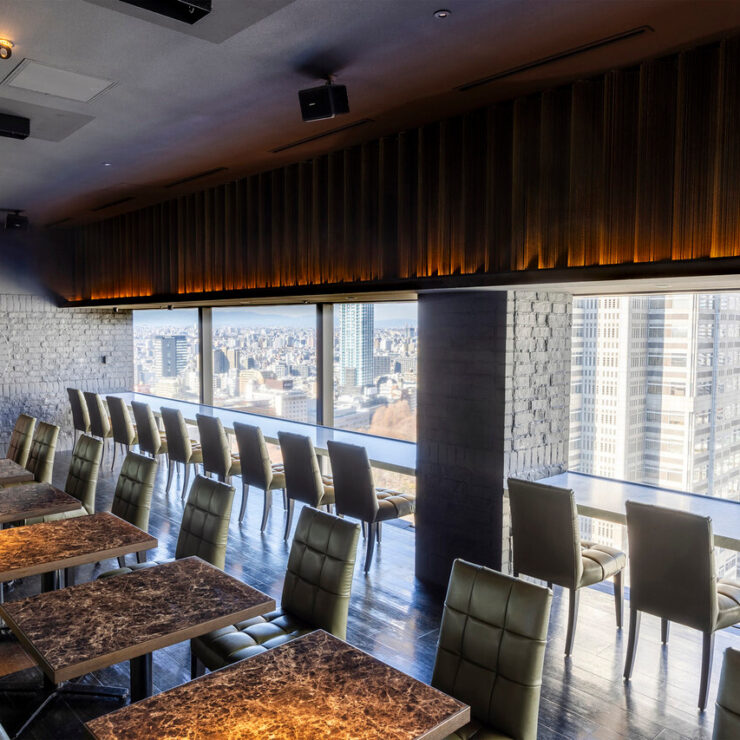
In a 25-floor tower, position matters as much as category. The quietest rooms sit in the high teens to low 20s — above street and park noise, below the upper-lobby elevator convergence. Low floors (3–7) trade skyline for speed: elevator waits shrink and the walk to the FamilyMart or conference floors is fast. Floors 23–25 put you beside Manhattan Table and the top-of-house mechanical hum that some light sleepers notice. 🛗
Three position rules that beat any category label:
- 🚪 Ask for a room away from the elevator bank at check-in — front desk staff accommodate when asked politely and the hotel is not full.
- 🌆 North-facing rooms look toward TMG and Chuo Park (softer light at sunrise); south-facing rooms catch more of the midday sun.
- 🚭 Every floor has designated smoking areas outside — if smoke sensitivity matters, also request distance from the smoking zone when booking a low floor.
💡 Check-in request script: “Could I have a quiet room on a high floor, away from the elevators, non-smoking?” Politeness plus specificity gets surprisingly good results at big Japanese hotels — the room inventory is huge, so there is almost always an alternative available.
💴 How Season Moves the Price (and How to Beat It)
The same 19 m² twin can cost wildly different amounts across the year. Trip.com’s calendar for this property swings from roughly US$79 base rates to days above US$300 at year-end. The pattern:
| Period | Demand | Strategy |
|---|---|---|
| Mid-January–February ❄️ | Low | Cheapest rooms of the year; book anything, prices rarely spike |
| March–April (sakura) 🌸 | Very high | Book 3+ months early; free-cancellation rates sell first |
| May (Golden Week) 🎏 | Peak | Avoid or book months ahead; expect 2–3× base |
| June–July 🌧 | Medium | Rainy-season deals appear; good value window |
| October–November 🍁 | High | Foliage season; book 6–8 weeks out |
| Late December–Jan 1 🎄 | Peak | NYE illuminations and countdown events; book 3+ months early |
Whatever the season, two booking habits hold: compare the free-cancellation rate against the non-refundable one (the gap is often 10–15%, and flexibility in Tokyo weather is worth it), and re-check prices after booking — Trip.com’s price-match promise refunds the difference in Trip Coins if the same room drops. 💳
❓ Frequently Asked Questions About the Rooms
Ready to pick your category? See live room-by-room rates for Shinjuku Washington Hotel on Trip.com. 🛌
 English
 Japanese
 Korean
 Chinese
 German
 Spanish
 French
 Thai
 Russian